Source Glitter Anti Bacterial Eva Foam Sheet for Crafts, Medical, and Household
Compare 30 listings for glitter anti bacterial eva foam sheet available in various sizes, thicknesses, and colors. Buyers can evaluate customization options, material properties, and packing details from suppliers in China.
Key considerations
Products List


Comprehensive Sourcing Guide
Sourcing Strategy for Glitter Anti-Bacterial EVA Foam Sheets
The procurement of EVA (Ethylene-Vinyl Acetate) foam sheets, specifically those featuring glitter finishes and anti-bacterial properties, requires a disciplined approach to navigating a market characterized by significant variability in material composition and manufacturing standards. Buyers seeking "glitter anti-bacterial EVA foam sheet" must distinguish between marketing terminology and verifiable product attributes. The supply chain for these materials is dominated by manufacturers in China, with specific clusters in Anhui and Fujian provinces, where production capabilities range from standard sheet formats to custom-molded solutions. This guide outlines the critical technical, compliance, and operational factors that define a successful sourcing strategy for this specific category of industrial and consumer goods.
Technical Specifications and Material Composition
Understanding the physical and chemical properties of the EVA foam is the foundational step in any procurement process. The core material is consistently identified as EVA, a copolymer known for its flexibility, durability, and resistance to water. In the context of the observed market data, the hardness of these sheets varies significantly, with documented ranges spanning from 20 to 80 degrees on the Shore A scale. This wide variance indicates that buyers must specify their exact durometer requirements, as a sheet suitable for a soft craft project may be too pliable for a rigid sole molding application.
Thickness is another critical specification that dictates the sheet's utility. Observed product listings indicate thicknesses ranging from 1mm to 3mm, with specific common increments including 1mm, 1.5mm, 1.8mm, 2mm, and 2-3mm. The surface finish, particularly the "glitter" aspect, is often achieved through molding or lamination processes. The shape of the product is available in various forms, including sheets, rolls, and molded soles. Dimensions are equally flexible, with standard sizes like A4, A5, 20x30cm, 30x40cm, and larger formats such as 1mx2m or 100x100cm. However, the market also supports fully customized dimensions, allowing for "any size" orders based on specific project needs.
The mechanical performance of the material is defined by several key metrics. High-performance variants demonstrate tensile strength between 81 and 130 MPa, ensuring the material can withstand significant pulling forces without tearing. Contraction percentage is a vital factor for dimensional stability, with observed data suggesting values of less than 0.4%, which is essential for precision applications. Furthermore, water absorption rates are critically low, recorded at less than 0.01%, confirming the material's suitability for environments where moisture resistance is paramount. The medium used in these sheets is often described as a non-toxic rubber pad, reinforcing the safety profile required for consumer-facing products.
Compliance, Certification, and Safety Standards
When sourcing materials that may come into contact with skin, medical devices, or electronic components, verifying compliance is non-negotiable. The supply chain for EVA foam sheets includes products that carry specific certifications, most notably ISO and RoHS. These certifications indicate that the manufacturer adheres to international management standards and restricts the use of hazardous substances, respectively. Buyers must explicitly request proof of these certifications, as not all listed products in the market may possess them.
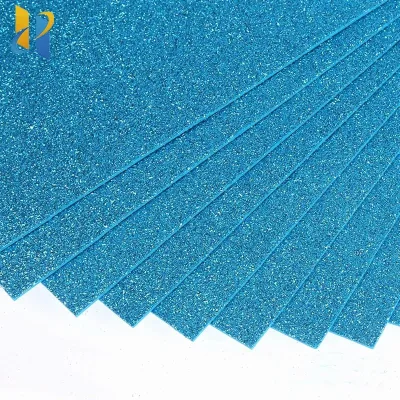
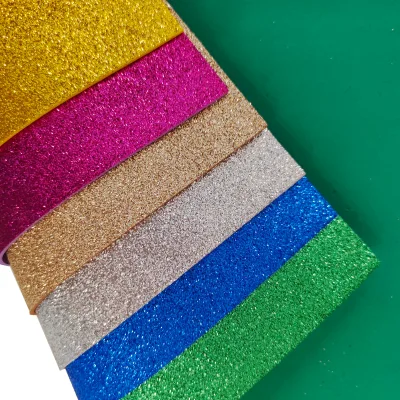
The "anti-bacterial" claim associated with the core keyword requires rigorous verification. While the product attributes list "Non-Toxic Rubber Pad" and usage in medical and electronic sectors, the specific mechanism of anti-bacterial action (e.g., silver ion infusion, specific surface treatments) is not universally standardized in the provided data. Procurement teams should demand third-party test reports that quantify the anti-bacterial efficacy against specific strains of bacteria, rather than relying on general marketing descriptions. Additionally, the material is described as "Color Plastic Sheet" or "Plain" in various listings, and the color palette includes purple, apple green, blue, white, and custom options. The presence of glitter adds a decorative layer that must not compromise the material's safety profile or its ability to meet the stated standards.
Cost Drivers and Pricing Dynamics
The pricing structure for EVA foam sheets is influenced by a complex interplay of factors, including material grade, customization level, and order volume. The observed price range in the market is extremely broad, spanning from $0.01 to $5.00 per unit. This variance is not indicative of a single product but rather reflects differences in thickness, size, finish, and the inclusion of special features like glitter or anti-bacterial treatments. A standard 1mm A4 sheet will naturally cost significantly less than a custom-molded, 3mm thick, glitter-finished sole with specific anti-bacterial certification.
Minimum Order Quantity (MOQ) is a primary driver of unit cost. The market data shows an MOQ range from 2 units to 6,000 units. Small MOQs, such as 2 or 12 pieces, are typically available for samples or very small batches but carry a premium per unit. Conversely, bulk orders of 6,000 units or more allow for significant economies of scale, bringing the unit price closer to the lower end of the observed spectrum. Buyers must balance their immediate inventory needs against the financial efficiency of larger orders. Additionally, packaging requirements, such as polybags, cartons, or PP woven bales, can impact the final landed cost, especially for international shipping where volume and weight are critical.
Typical Applications and Usage Scenarios
The versatility of EVA foam sheets allows them to serve a diverse array of industries. The documented usage categories include medical, electronic, household, and craft applications. In the medical sector, the non-toxic nature and low water absorption make these sheets suitable for protective covers, padding, or components within devices where hygiene is critical. The electronic industry utilizes the material for insulation and protective cushioning, leveraging its hardness range and tensile strength to prevent damage to sensitive components.
For the household and craft sectors, the aesthetic appeal of the glitter finish is a primary driver. The material is used for DIY projects, educational tools, and decorative items. The "Plain" and "DOT" styles, along with various colors, offer designers a wide canvas for creative expression. Furthermore, the specific product models listed, such as "EVA Foam Molding Soles," point to a significant application in the footwear industry, where the material's flexibility and durability are essential for comfort and longevity. The ability to customize size and shape further expands these applications to include custom packaging inserts, gym mats, and specialized industrial gaskets.
Supplier Evaluation and Geographic Origins
Geographic concentration plays a significant role in the sourcing landscape. The majority of suppliers for these products are located in China, with specific hubs in Anhui and Fujian provinces. These regions have developed specialized supply chains for EVA foam production, offering a wide range of models from "XM-17006" to "EVS1016." When evaluating suppliers, buyers should look beyond the location and assess the supplier's capability to meet specific customization requests. The availability of "Customization" as a standard attribute suggests that most suppliers are flexible, but the depth of this capability varies.
Key evaluation criteria should include the supplier's ability to provide samples, as indicated by the "Free Sample" attribute in some listings. This allows buyers to physically test the hardness, glitter adhesion, and anti-bacterial claims before committing to a bulk order. Packaging capabilities are also a critical differentiator; suppliers may offer simple plastic bags, cartons, or complex PP woven bales depending on the order size and destination. Buyers should verify the supplier's consistency in maintaining the specified thickness and hardness tolerances, as these are critical for the final product's performance.
Quality Control and Long-Term Procurement Considerations
Implementing a robust quality control (QC) protocol is essential to mitigate the risks associated with the high variability in the EVA foam market. Buyers should establish clear acceptance criteria based on the observed specifications, such as hardness between 20-80 degrees, thickness within the 1-3mm range, and water absorption below 0.01%. Regular sampling and testing, particularly for tensile strength and contraction percentage, should be integrated into the procurement lifecycle. The "Sample: Free" attribute offers a low-risk opportunity to validate these metrics before scaling up.
Long-term procurement success depends on building relationships with suppliers who can maintain consistency over time. The "Customized" nature of many orders means that the supplier must be able to replicate the exact specifications for future batches. Buyers should also consider the lead times and production capacity, which are not explicitly detailed in the provided data but are critical for supply chain planning. Finally, the environmental and safety aspects, such as the "Non-Toxic" designation and RoHS compliance, should be re-verified periodically to ensure that the supplier continues to adhere to evolving global regulations. By focusing on these technical and operational pillars, buyers can effectively navigate the market for glitter anti-bacterial EVA foam sheets and secure a reliable supply of high-quality materials.
FAQs
What customization options are available for glitter anti bacterial eva foam sheet?
Customization is available for size, color, and thickness. Buyers can request specific dimensions like A4 or 20x30cm, choose from colors such as purple or apple green, and select thicknesses ranging from 1mm to 3mm based on their project needs.
Which certifications do glitter anti bacterial eva foam sheet products typically hold?
Some products carry ISO and RoHS certifications to ensure safety and compliance. These certifications indicate adherence to international management standards and restrictions on hazardous substances, which is critical for medical and electronic applications.
How does the hardness of glitter anti bacterial eva foam sheet vary?
Hardness ranges from 20 to 80 degrees on the Shore A scale depending on the specific product model. This wide variance allows selection for applications requiring soft craft materials or rigid sole molding solutions.
Can I get free samples of glitter anti bacterial eva foam sheet?
Free samples are available from certain suppliers to verify material quality. This allows buyers to test physical attributes like hardness, glitter adhesion, and thickness before committing to larger bulk orders.
What is the minimum order quantity for glitter anti bacterial eva foam sheet?
Minimum order quantities range from 2 units up to 6000 units depending on the supplier. Lower MOQs suit sample orders while higher volumes secure better economies of scale for bulk production needs.
Where are the manufacturers of glitter anti bacterial eva foam sheet located?
Manufacturers are primarily located in China, with specific clusters in Anhui and Fujian provinces. These regions offer specialized supply chains capable of producing standard sheets and custom-molded solutions.
What are the water absorption properties of glitter anti bacterial eva foam sheet?
Water absorption rates are critically low, recorded at less than 0.01 percent. This property confirms the material's suitability for environments where moisture resistance is essential for medical or electronic components.